# Day 01 Delhi
On your arrival in Delhi you will be transferred to your hotel. Delhi has been inhabited from the 6th century BC has been a capital of many kingdoms. It has been destroyed and rebuilt many times and is called the "city of cities". Delhi's culture has been influenced by its different rulers and the city is full of beautiful monuments. The Mughal rulers influenced the food habits of the residents and Mughlai cuisine originated here. Due to the proximity of different states, all festivals are celebrated here. Old Delhi is a maze of small lanes lined and old buildings and New Delhi has large road with huge buildings. Delhi is the capital of India and is the hub for politics.
# Day 02 Delhi
Today you have a full day tour of Delhi. Your morning tour starts with Old Delhi, built by the Mughal emperor Shah Jahan in 1639 AD. You will visit the Raj Ghat where father of our nation Mahatma Gandhi was cremated. You will be visiting the museum that was built to commemorate him. You will be driven past the iconic Red Fort and Chandni Chowk, a very popular and a busy market in Old Delhi. Later we will move to the next stop - Jama Masjid, one of the iconic, historic and largest mosques in India - built by Shah Jahan. A rickshaw ride (optional) in Chandni Chowk could be quite interesting as this part of the city is quite crowded as it is full of shops. These numerous shops sell delicious mouth-watering food, clothes, jewels, household goods, etc. and are virtually a shopper's paradise.
In the afternoon, you will visit Qutub Minar, touted as India’s largest Minaret. Qutub Minar, a UNESCO World Heritage Site, was built in 1192 by Turk ruler Qutub-Ud-Din Aibak. You will then move forward to Humayun’s tomb, yet another UNESCO world heritage site. Your next stop is India Gate, built in memory of the Unknown Soldier. You will be driven past the Parliament House, President’s House and other Government Secretarial Buildings, to your final stop will be at Lakshminarayan Temple, a temple dedicated to Lakshmi and Lord Narayana.
# Day 03 Delhi to Jaipur
You will be transferred by road to Jaipur. Jaipur, the capital of Rajasthan gets its name from Maharaja Jai Singh who built this city. Many captivating palaces are present here having breathtaking design and architecture. In the 18th century Prince of Wales had visited Jaipur and the entire city was painted in pink color due to which this city is also known as the pink city. The origin of Jaipur goes back to more than 260 years.
You have the afternoon at leisure.
# Day 04 Jaipur
Today you have a full day tour of Jaipur and Amer Fort. The morning journey starts from Amer fort also known as Amer Palace, the earlier capital of Jaipur. This magnificent fort was constructed in red sand-stone and marble by Raja Man Singh and is divided into four sections each with a courtyard. The main entrance gate is Surajpol having a fascinating architecture. Near the Ganesh Gate, there is a temple dedicated to the Goddess Sila Devi. The Diwan-e-Aam - Hall of public audience, Diwan-e-Khas - hall of private audience, Sheesh Mahal - palace of mirrors and Sukh Niwas are quite beautiful. At the he Sukh Niwas, a pleasant climate is created by winds that blow over a water cascade.
In Jaipur you will be taken to Maharaja City Palace, a royal palace with seven storey as well as Jantar Mantar, the observatory. This wonderful observatory is attracted by mathematician as well as astronomers of whole world. City palace is perfect blend of all three excellent styles (Mughal, Rajput and European).Drive past another palace, Hawa Mahal is popular all over world for it magnificent architecture. A tour of Jaipur is not complete without shopping. Jaipur is famous for clothes, carpets, precious and semi-precious stones and jewelry and various handicrafts made of wood, metals, etc. and also for silk paintings and miniatures.
# Day 05 Jaipur to Agra
You will be transferred by road to Agra visiting Fatehpur Sikri enroute. Fatehpur Sikri which was built in the 16th century by Emperor Akbar. Fatehpur Sikri holds exceptional testimony to Mughal civilization and is one of well-known UNESCO World heritage site of India and has various historical monuments. You will visit the Jama Masjid, followed by the Tomb of Salim Chishti, the five storied Panch Mahal and Buland Darwaza a graceful monument and stupendous piece of beautiful architectures. It is central portico with a total of three arched entrances and is locally known as Horseshoe gate. You will visit the other graceful buildings of this place such as Ibadat Khana, Mariam-uz-Zamani’s palace, Naubat Khana and Birbal’s house.
Agra the former capital of Hindustan is a city on the banks of the river Yamuna. Agra is a major tourist destination of India and a part of the Golden Triangle Tour along with Delhi and Jaipur. Agra also known as Akbarabad went through its peak during the time of Mughals and was the capital of under the Mughal rulers Akbar, Jahangir and Shahjehan.
On arrival in Agra you will be transferred to your hotel. Agra the former capital of Hindustan is a city on the banks of the river Yamuna. Agra is a major tourist destination of India and a part of the Golden Triangle Tour along with Delhi and Jaipur. Agra also known as Akbarabad went through its peak during the time of Mughals and was the capital of under the Mughal rulers Akbar, Jahangir and Shahjehan.
# Day 06 Agra to Delhi
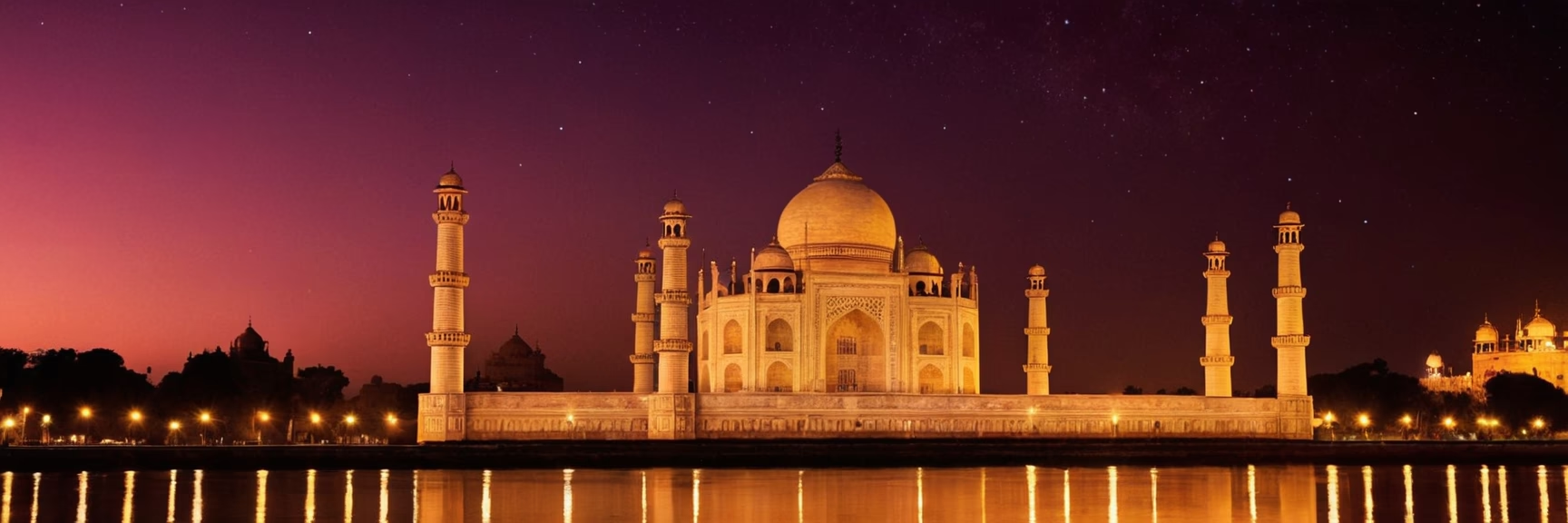
This morning during the visit Agra, you will be taken to Taj Mahal, one of the wonders of the world. This beautiful building is elegantly built with white marble by the Mughal Emperor Shah Jahan between the years 1631 to 1648 and it was built in the memory of his favorite beloved Queen Mumtaz Mahal. Standing majestically on banks of Yamuna River, this breathtaking, immensely beautiful monument is a synonymous to romance and love.
Your next stop Agra Fort is a UNESCO World Heritage Site and known for its architectural structure and was built in the 16th century during the Mughal Empire. This place comprises of several fairy-tale palaces like Khas Mahal and Jahangir Palace. Over here you will also get a chance to see Diwan-e-Aam and Diwan-e-Khas, which are also known as private audience hall and public audience hall. Agra is famous for inlaid marble work and handicrafts. TAJ MAHAL IS CLOSED ON FRIDAYS.
You will be transferred by road to Delhi.
On your arrival in Delhi you will be transferred to your hotel. Delhi has been inhabited from the 6th century BC has been a capital of many kingdoms. It has been destroyed and rebuilt many times and is called the "city of cities". Delhi's culture has been influenced by its different rulers and the city is full of beautiful monuments. The Mughal rulers influenced the food habits of the residents and Mughlai cuisine originated here. Due to the proximity of different states, all festivals are celebrated here. Old Delhi is a maze of small lanes lined and old buildings and New Delhi has large road with huge buildings. Delhi is the capital of India and is the hub for politics.
# Day 07 Delhi to Amritsar
You will be transferred to airport in time for your flight to Amritsar.
On arrival in Amritsar you will be transferred to your hotel. Amritsar means Pool of Nectar and gets the name from the holy tank - Amrit Sarovar which surrounds the Golden Temple. Although the Golden Temple is the most important place of worship for the Sikhs. This place is also visited by millions of people of every religion, from all over the world. It is said that the District of Amritsar was the abode of Saints and Sages during the Vedic ages. The city was built around 1577 by Guru Ram Das and the place was called Ram Das Pura. The population came under the influence of Guru Nanak in the beginning of 16th century. The city has numerous Gurudwaras, temples, mosques, churches, forts, galleries, gardens, libraries, memorials and museums. It holds many fairs, festivals and folk dances.
Today evening you will be taken to the Wagah Border. The Wagah border closing and the lowering of the flags ceremony or the Beating Retreat ceremony is a daily military practice between the soldiers of India and Pakistan. The ceremony starts with a parade from both the sides. As the sun sets, the border gates are opened and the two flags are lowered, folded and the soldiers from both the sides shake hands and close the gates again.
# Day 08 Amritsar
The morning city tour of Amritsar takes you to the Golden Temple and other top attractions of Amritsar. Amritsar earlier known as Ramdaspur is the spiritual and cultural centre for the Sikh religion. The Golden Temple referred as Harmandir Sahib or Darbar Sahib was created in the 16th century by the fifth Sikh Guru. You would find 4 doors leading you towards the threshold of the temple. These doors signifies the ‘all religion and culture’ acceptance by the Sikh brothers. The Guru Granth Sahib -t he Holy Book of the Sikhs is placed reverently in the heart of the golden temple. Jallianwala Bagh is the place where General Dyer killed hundreds of innocent Indians.
Today you have the afternoon at leisure.
# Day 09 Amritsar to Delhi
You will be transferred to airport in time for your flight to Delhi.
On your arrival in Delhi you will be transferred to your hotel. Delhi has been inhabited from the 6th century BC has been a capital of many kingdoms. It has been destroyed and rebuilt many times and is called the "city of cities". Delhi's culture has been influenced by its different rulers and the city is full of beautiful monuments. The Mughal rulers influenced the food habits of the residents and Mughlai cuisine originated here. Due to the proximity of different states, all festivals are celebrated here. Old Delhi is a maze of small lanes lined and old buildings and New Delhi has large road with huge buildings. Delhi is the capital of India and is the hub for politics.
# Day 10 Delhi
You will be transferred to Delhi airport.